What is TETRA?
- TErrestrial Trunked RAdio (initially “Trans European Trunked Radio”)
- Advanced digital radio communication system for public safety, army, utilities, transport
- Standard promoted by ETSI – European Telecommunication Standards Institute
- Operating internationally across Europe, Asia, Africa, South America, Middle East
Introduction & Overview
Introduction of digital radio communications system to be used for communication among authorities and organizations dealing with security-related activities, fire fighting, medical protection and other forms of property and personal protection, as well as private companies, was initiated in November 2012.
Internationally standardized digital wireless network replacing existing independent analogue radio networks was now available for the first time. Networks are planned for potential linking of various units into one functional group, especially in line with emergency plans.
In addition to Montenegro, other countries have already introduced TETRA network as well, such as Austria, Belgium, Bulgaria, Croatia, Denmark, Estonia, Finland, Germany, Great Britain, Hungary, Iceland, Ireland, Lithuania, Macedonia, the Netherlands, Norway, Portugal, Serbia, Slovenia and Sweden.
Frequencies
Authorized use: 380–400 MHz
Infrastructure
56 Base Stations deployed throughout Montenegro
Standards
TETRA ensures secure communication and data transfer capabilities
TETRA Standards & Components
Essential TETRA Standards
- Air Interface (AI)
- Voice plus data (V+D)
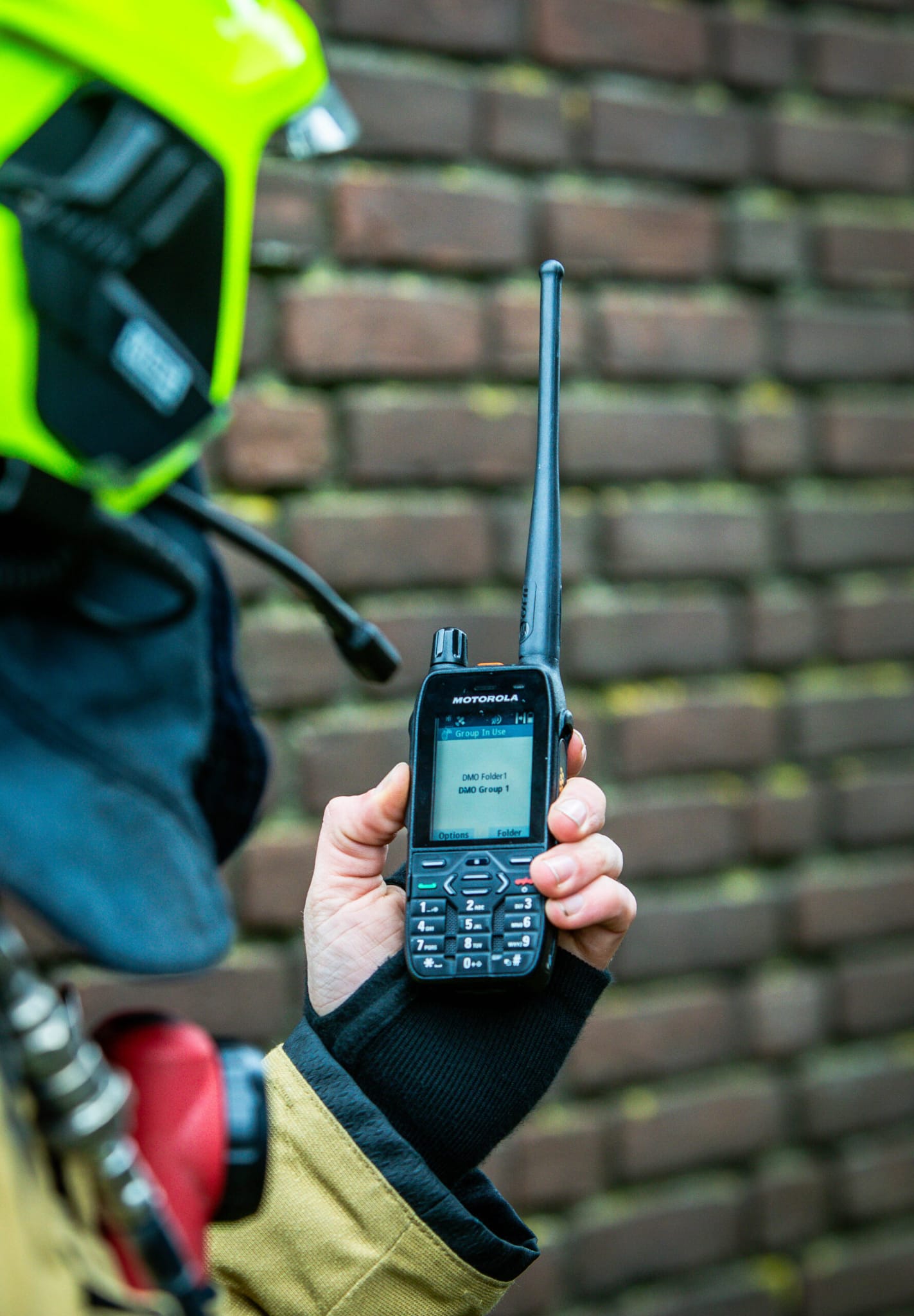
- Direct Mode Operation (DMO)
- TETRA Speech Codec
- Packet Data Optimized (PDO)
- Inter-System Interface (ISI)
- Peripheral Equipment Interface (PEI)
Dimetra IP Radio-System Components
- Switching and Management Infrastructure (SwMI) or MSO
- Base Stations
- Network Management Subsystem
- Dispatching Subsystem
- Terminals
Who Uses the Network?
Ministry of Internal Affairs of Montenegro
Fire-fighting units and Municipal police
Emergency units / dispensaries
CEDIS
Other government organizations
Private organizations
Operating Modes
Zone controller controls call processing and audio routing, each site has an active control channel and at least one operating traffic channel.
Local SC performs call processing while ZC continues the processing for other sites.
Terminal uses its antennae and radiated power to communicate with other terminals within the radio band.
Communication & Security Services
Voice Services
- Group Call (one-to-many)
- Multi-group
- Individual Call (semi-duplex and full duplex)
- Telephone Interconnection (PABX)
- Scanning
- Dynamic Group Allocation
Data Services
- Status Services
- Short Data Service - SDS (140 characters)
- IP Package Transmission
- Emergency Alarm
Security Services
- Authentication
- Air Interface Encryption
- End-to-End Encryption
- Separate Management