TETRA Standard & Digital Radio Technology

Trusted Worldwide for Mission-Critical Communications

TETRA is present in over 117 countries across all continents.

This confirms that there is practically no alternative to TETRA in meeting the communication needs of users in the field of security.

0+
Countries Worldwide

Analogue Systems vs. TETRA Digital Radio

Analogue systems
Analogue

Single-frequency / limited features

  • One frequency typically serves one user group
  • Lower overall system capacity and efficiency
  • Lower resistance to interference
  • Historically low level of information security protection
  • Technological limitations; sometimes reliance on commercial services
TETRA digital radio
TETRA

Better propagation / secure / efficient

  • Better signal propagation and higher resistance to interference
  • Integration of different information types (voice + data)
  • Efficient crypto protection options
  • Fast call set-up (typically ~0.2 s)
  • Supports large shared professional networks (multi-user infrastructure)

From Single Frequency to Multi-Channel Efficiency

Traditional analogue systems relied on a single frequency serving one user group. This limited overall system capacity and efficiency.

TETRA introduces Time Division Multiplexing (TDM), enabling four independent communication channels within a single carrier frequency.
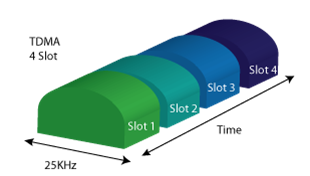
TDM

Large National Professional Radio Networks

Instead of having each user operating in its own limited network, TETRA enables the development of large national systems where infrastructure is shared by multiple professional users.

Such implementation exists in Montenegro, where different services operate within their own user groups while sharing the same national communication infrastructure.

Independent User Groups

Each agency operates normally within its own communication group.

Dispatcher Control

When required, dispatcher connects several groups into one common group.

Coordinated Operations

Allows police, army, emergency and rescue units to work together efficiently.

Why TETRA Makes a Difference in the Field

Reliable During Crises

Designed to remain operational during large-scale incidents when commercial networks may fail.

Multi-Agency Coordination

Enables police, military, emergency and rescue units to communicate within shared national infrastructure.

Efficient Spectrum Usage

Maximizes radio spectrum capacity through structured channel management.

High Network Availability

Built for mission-critical environments where communication downtime is unacceptable.

Secure Communication Environment

Ensures protected exchange of operational and sensitive information.

Scalable National Architecture

Supports expansion from local deployments to large nationwide systems.

Advanced Encryption & Data Protection

Unlike analogue systems that historically provided low levels of information protection, TETRA ensures maximum data protection.

The system offers high-quality security features with selectable encryption methods for voice, data, signalling and user identity.

Voice Encryption

Secure real-time voice communication between users.

Data Encryption

Protection of transmitted operational and mission-critical data.

Signalling Protection

Encrypted signalling to prevent interception or manipulation.

User Identity Protection

Secure authentication and identity confidentiality.

TETRA Frequency Allocation

Usage Category Frequency Band
Public Security Units 380 – 400 MHz
Commercial Use 410 – 430 MHz & 450÷470 MHz
Other Potential Bands 870 – 876 MHz & 915 – 921 MHz

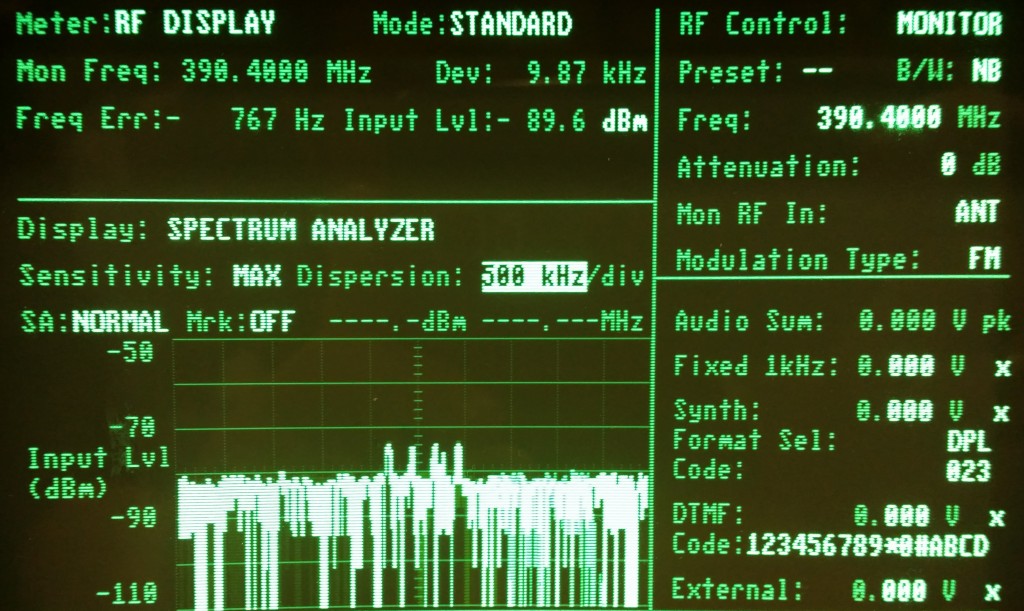
Spectrum Analyzer Capture

TETRA base station MTS 4 spectrum

Image of TETRA base station MTS 4 spectrum recorded using a spectrum analyzer.

Meeting Modern Security Challenges

Given the increasing security challenges in the modern world, the communication needs of police, military, emergency response, fire fighting and rescue units exceed the possibilities offered by conventional analogue radio networks.

TETRA provides a secure, reliable and mission-critical communication platform designed to support large national infrastructures and ensure uninterrupted coordination when it matters most.

m